The Art of Floral Composition: How Flowers Fill a Canvas
Flowers can take on very different personalities depending on how they are arranged on a canvas. A few oversized blooms create a very different impression from a loose field of wildflowers, while open space can be just as important as the flowers themselves.
In floral art, composition shapes where the eye goes, what stands out, and how the painting feels as a whole. Here are five common approaches artists use to arrange flowers on canvas.

Large Blooms
A few large flowers can immediately become the focus of a painting. By increasing their scale and allowing them to occupy much of the canvas, artists draw attention to the curves, shapes, and structure of each bloom.
This approach can make even a familiar flower feel more striking, turning it from a small detail in nature into the main visual presence of the artwork.

Gathered Bouquets
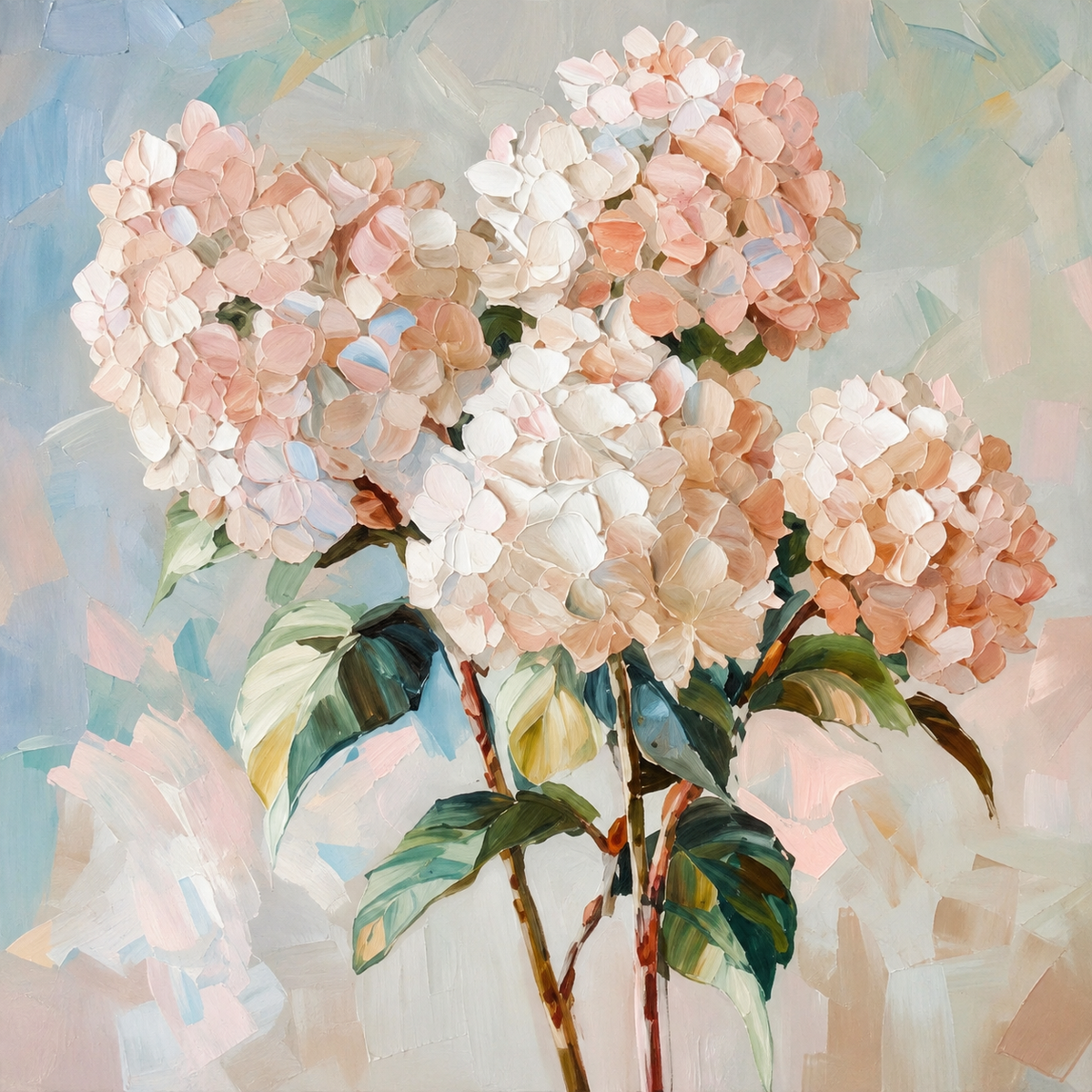
In a gathered bouquet, multiple flowers come together around a central area, creating a clear visual focus.
Different heights and shapes keep the arrangement from feeling too uniform, while the clustered composition holds everything together. Some bouquets feel carefully arranged; others are looser and more spontaneous, but the flowers are still experienced as a connected group.

Wild & Scattered Florals
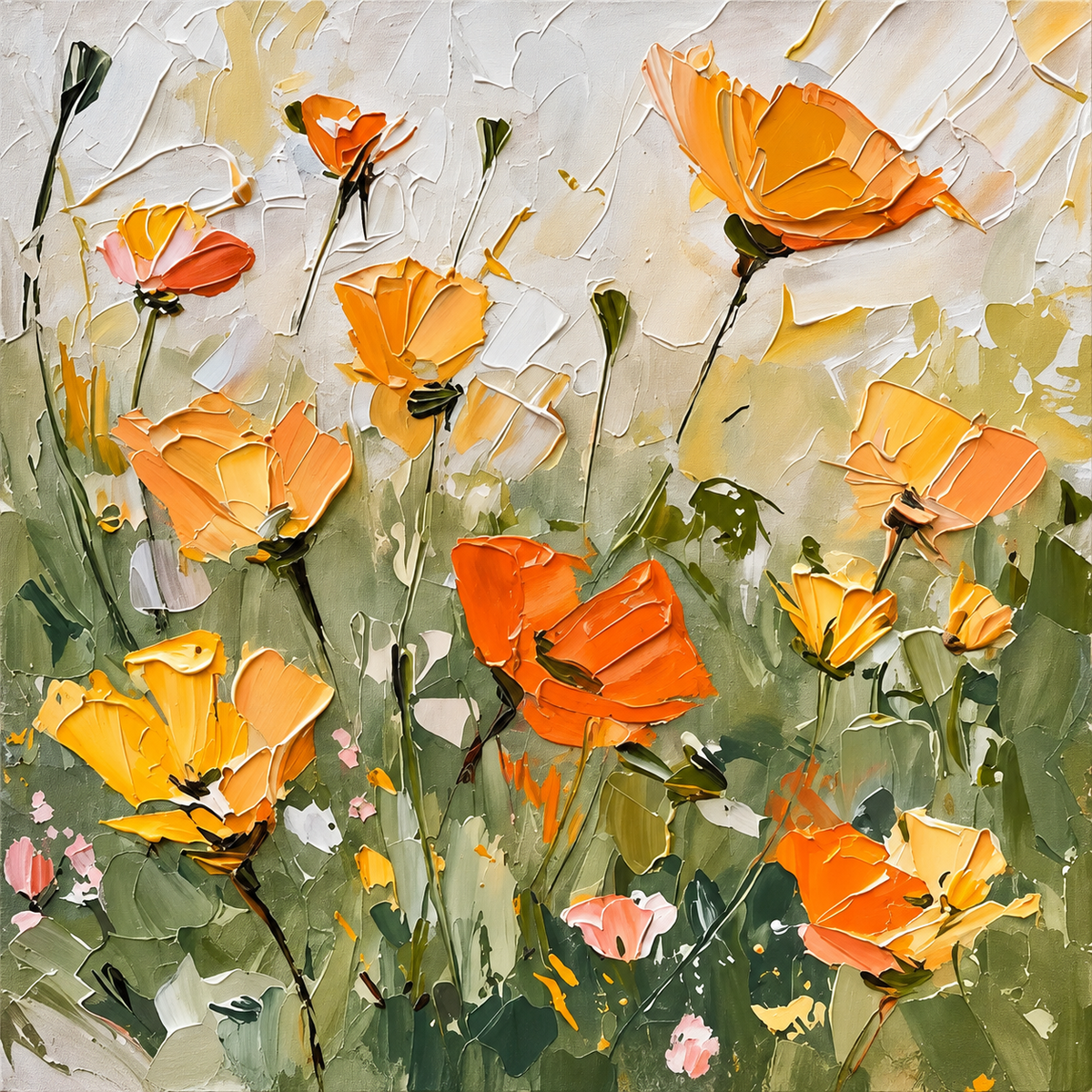
Wildflower compositions take a freer approach. Blooms and stems appear at different heights and intervals, often without a single dominant center.
This irregular arrangement encourages the eye to wander across the canvas, creating a natural sense of rhythm and flow. The result can recall the unstructured beauty of flowers growing freely in a meadow.

Minimal Florals
Sometimes, what surrounds the flowers matters just as much as the flowers themselves.
Minimal floral compositions often feature only a few blooms or stems, leaving generous areas of open space around them. This negative space gives each form room to stand on its own and brings greater attention to placement, proportion, and balance.

Full-Canvas Florals
At the other end of the spectrum, some floral paintings allow flowers to take over nearly the entire canvas.
Blooms overlap, leaves weave between them, and forms may continue beyond the edges of the composition. Repetition and layering create a sense of abundance, encouraging the eye to experience the flowers as a whole rather than focusing on a single bloom.

Different Ways to See Flowers
There is no single way to arrange flowers on canvas. A few large blooms can create a strong visual focus, a bouquet can bring different forms together, scattered wildflowers can lead the eye across the painting, and open space can make even the simplest flower feel significant.
From minimal arrangements to canvases overflowing with blooms, composition changes the way we see a familiar subject—and gives artists countless ways to make floral art their own.